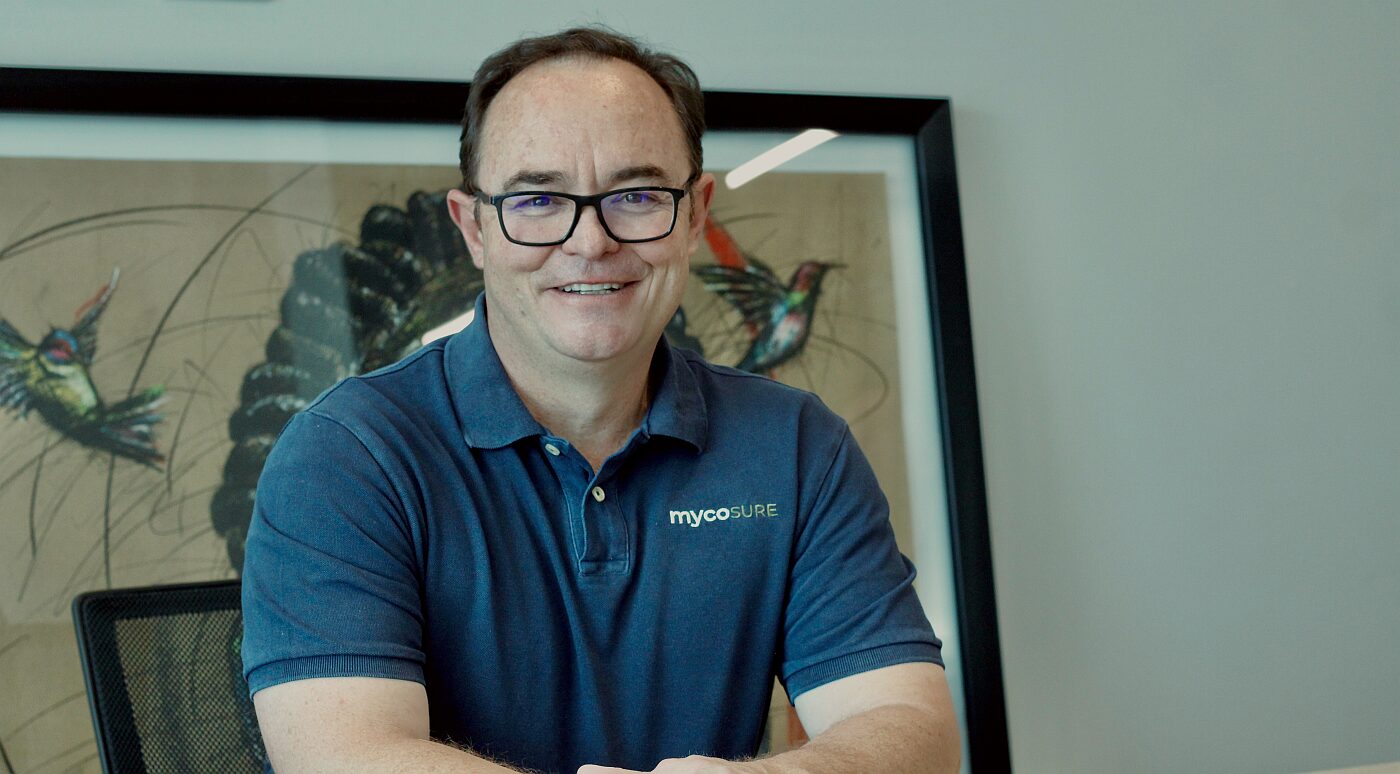
Charles Reed is cofounder of South African biotech startup Mycosure, which is growing protein-packed mycelium using biomass fermentation.
The views expressed in this article are the author’s own and do not necessarily represent those of AgFunderNews.
South Africa has no shortage of entrepreneurial talent. Across the country, small and medium-sized enterprises are developing world-class ideas that could solve some of our most pressing challenges, from food security and climate resilience to sustainable industrialization.
Despite this potential, too many of these businesses struggle to scale their innovations into impactful solutions. If we want a thriving innovation ecosystem, we need to create platforms where public and private sector role players work more effectively together.
At present, the ecosystem lacks the depth of resources, infrastructure and coordinated support needed to nurture innovation at the pace required for meaningful change.
As the founder of a food biotechnology business supported through the Council for Scientific and Industrial Research (CSIR), I have experienced both the promise and the paradox of innovating in an emerging market.
Building an ecosystem
Innovation is essential for growth. It drives productivity, creates high-value jobs and positions economies to compete globally. Yet innovation requires access to appropriate capital, research and development infrastructure, and technical expertise.
These are often in short supply for early-stage businesses in developing countries. The result is that solutions capable of addressing systemic social and environmental challenges frequently take far longer to scale than they should, or in some cases, fail to progress at all.
This is not unique to South Africa. The World Bank has described it as the innovation paradox. Economies that most urgently need innovation to unlock growth and address development issues are often those least equipped to invest in it. There are, however, powerful examples of how this cycle can be broken.
Vietnam and Chile have both demonstrated how deliberate, long-term investments in innovation ecosystems can transform economic trajectories. Vietnam’s strategic push into technology-led manufacturing and Chile’s commitment to research, entrepreneurship and science-driven industries have significantly boosted GDP growth, global competitiveness and job creation.
South Africa has similar potential. Small and medium-sized businesses already contribute around a third of GDP and more than half of the country’s employment. Strengthening support for innovation could amplify this impact dramatically. Biotechnology is one sector that highlights
the opportunity. With targeted support, it could seed a thriving bioeconomy that diversifies the economy, creates jobs across a range of skill levels and opens new export markets.
This is not a distant ambition. It is a real and growing opportunity that we risk missing if bold action is not taken.
Partnerships
In our business, we are working to address a fundamental challenge in food production, specifically the UN’s projected annual shortfall of 250m tons of Protein by 2050. Traditional livestock farming is carbon-intensive, requires significant natural resources such as water and is increasingly unsustainable as global demand for protein grows. We need new food production solutions to help meet our future nutritional needs. One emerging solution involves advanced fermentation techniques to produce sustainable, nutrient-rich alternative proteins. This technology has the potential to reduce environmental impact, enhance food security and establish a new high-value industry for South Africa.
The government’s Bio-Economy Strategy recognizes biotechnology as a driver of economic diversification, exports and green jobs. It is useful to focus on the role of the Department of Science, Technology and Innovation (DSTI), which has emphasized the importance of embracing new technologies to strengthen food systems and ensure South Africa remains globally competitive.
Experience on the ground shows that the strategy is directionally correct, yet for these ambitions to translate into tangible results, early-stage businesses need stronger, more consistent support to scale their solutions.
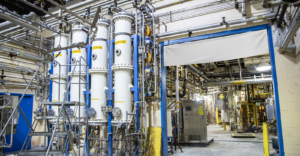
Partnerships have been critical in enabling our early progress. Our collaboration with the Council for Scientific and Industrial Research (CSIR) with the support of DSTI and the Technology Innovation Agency (TIA) provides access to world-class expertise, advanced research facilities and technical infrastructure that would otherwise be unattainable for many small businesses.
Without this kind of partnership, the technical hurdles faced by tech-based ventures would be significantly harder to overcome.
Private sector initiatives also play a vital role. Accelerator programs and appropriate catalytic funding and investment help early-stage businesses navigate the complex challenges of scaling innovation. These ventures often struggle to attract capital because of the longer timelines and technical risks associated with developing and commercializing breakthrough technologies.
Forward-looking funders recognize that these challenges should not deter support when the potential for both financial return and social and environmental impact is high.
‘Innovation cannot happen in isolation’
For investors specifically, supporting innovation requires a different mindset. Funding early-stage ventures is inherently risky, yet it also offers the potential for outsized returns. Globally, impact investors and development finance institutions are increasingly seeking opportunities that align with sustainable development goals. South Africa can position itself as a leader in these areas if we strengthen funding channels, foster collaboration between research institutions and businesses, and reduce barriers that slow down the commercialization of innovation.
The lesson is clear: innovation cannot happen in isolation. Building a thriving bioeconomy that creates jobs, drives exports, and tackles environmental and social challenges will require a coordinated effort between policymakers, research institutions, entrepreneurs, and both funders and investors.
These play different but complementary roles: funders – such as grant-makers, concessionary financiers, and in-kind supporters – provide non-commercial capital that is often the only option in the early stages and helps de-risk a venture; investors are commercially driven and seek returns, though some, like impact investors, also measure social or environmental outcomes. Successful innovation ecosystems around the world ensure access to both pools of funding, alongside strong research and development infrastructure and
public–private collaboration.
‘Innovation is not a luxury reserved for developed economies’
South Africa has the talent and scientific capabilities to match these models. What we need is deliberate alignment to bring these elements together.
Our journey illustrates what is possible when innovation is supported. With the right partners, expertise and resources, early-stage businesses can progress from concept to scalable solutions that have both commercial viability and socio-economic and environmental benefit. The potential multiplier effect is immense.
A robust bioeconomy can create thousands of new jobs in high-value science and manufacturing roles, attract foreign investment and establish South Africa as a global leader in sustainable biotechnology.
Innovation is not a luxury reserved for developed economies. For South Africa, it is a strategic necessity to achieve inclusive, sustainable growth. By bridging funding gaps, fostering collaboration and supporting early-stage ventures, we can unlock the full potential of our innovation ecosystem.
With deliberate investment and collective commitment, South Africa can be a leader in the global bioeconomy race and secure a future that is both prosperous and sustainable.