
Is precision health tech a gamechanger that could move the needle on public health, or are its benefits confined to a small cohort of affluent, health-conscious consumers seeking to fine-tune their wellness?
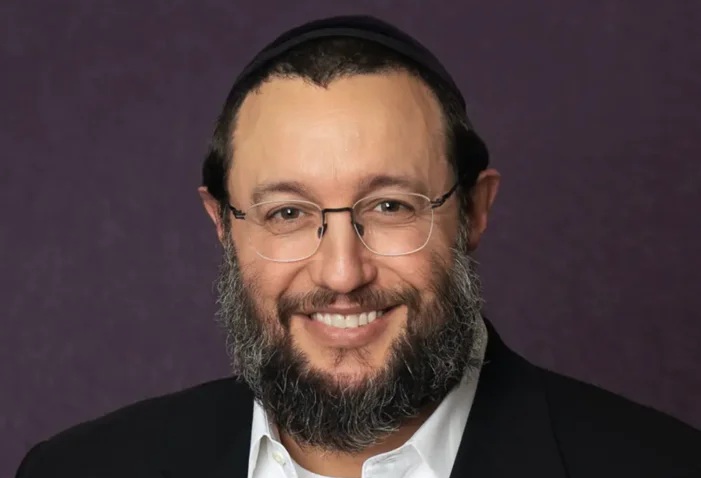
While early adopters of high-tech wearables and personalized nutrition and health technologies tend to be wealthier than average, the beauty about the next generation of ‘Medicine 3.0” tools is their potential to democratize health, says Cornucopian Capital founder and managing partner Aryeh Ganz.
“For us, it’s about identifying a technology that can scale and be accessible from day one,” says Ganz, who founded private family office SAGEN Trust Company in 2001 after his father in law S. Daniel Abraham sold Slim-Fast Foods to Unilever in 2000 for $2.3 billion.
“We’re very focused on determining from the very outset: is this a technology that will be cost effective and can scale and become accessible to the masses? added Ganz, who founded New Jersey-based Cornucopian Capital in 2020.
“If we have to rely on early adoption at a high price, which only a wealthy person could afford, we probably won’t invest in that type of technology.”
Cornucopian’s mission is to enable consumers to improve metabolic health by moving away from treating disease to a new data-driven predictive and preventative model, says Ganz. “What if we could make improved health span, performance, and longevity accessible to everyone?”
AgFunderNews (AFN) caught up with Ganz (AG) to discuss commercializing university science, investing in scalable precision health tech, and emerging opportunities in GLP-1 care, biosensing and personalized nutrition.
AFN: What’s the rationale behind Cornucopian Capital?
AG: Cornucopian Capital is kind of my last hurrah in the investment world. I’ve been a private investor for 25 years and it’s a fitting time to talk about this because one of my early investments in the precision health space was a company called Freenome in South San Francisco, which has just got FDA approval for a [blood-based screening] platform that basically eliminates the need for a colonoscopy.
It’s an amazing company and it really inspired me, and so now Cornucopian Capital is focused on preventative and precision health, and we’ve developed a pretty deep thesis around which technologies are most relevant to driving conversations towards prevention.
We’re all familiar with the chronic disease and metabolic health crisis in the United States. The vision behind Cornucopian Capital was to invest early in translational science out of universities, and to do that with a company building mindset and framework, and to invest in companies that can really move the move the needle at scale and make preventative health accessible to as many people as possible.
Freenome is a great example of that. Colon cancer is the second leading cause of death from cancer in the United States. To have a test that can now be fully covered by Medicare and can act as a screening for hundreds of thousands of people that don’t do colonoscopies for all types of reasons is to me an exciting moment.
When I invested in that company, it was at the stage where we were starting to see a convergence of AI and biotechnology and using these platforms to create the next frontier in precision health. So that’s what we focus on.
AFN: Whose capital is behind Cornucopian? Is it a fund?
AG: About 10 years ago I started thinking about this thesis around precision health and established a dedicated team, which is separate from the [SAGEN] family office.
Today it’s a separate team [established in 2020] and we’re five full-time people with another five active advisors, and a couple of venture partners. We work with a consortium of family offices, so it’s like almost an investment club.
We’re bringing in other family offices alongside us, as well as now corporate VC that has now established a relationship with us. But we are not a fund. We’re not structured as a fund.
It’s actually a very interesting model. It’s a single SPV [special purpose vehicle]. So you are dedicated as part of this club into one entity, and then we make class by class investments, and this consortium of family offices participates in these investments.
AFN: At what stage do you invest?
AG: We start out pre-seed and seed or we’ll create a company commercializing technology out of a university and de-risk it. We get to know founders and technologies, patiently vet them, and then double down and lead a Series A where we’ve got high level of conviction.
We are very focused on making two large investments per year and probably a handful of smaller investments that are almost like toeholds to establish our pipeline.
Series A [checks] can be in the range of $5-8 million depending on the round size, and at the pre-seed and seed level, it usually starts at about half a million dollars and sometimes even lower if it’s really early.
It’s a very intentional model to get to know technologies and founders really early, build conviction, build relationships, and become the partner of choice.
AFN: Are you operating on a different timeline to VCs?
AG: Yes. We’ve got different timelines because we’ve got no fund structure so we’re able to be a lot more patient, which I think in this sector is very important.
So far we’ve invested over $30 million over a five-year period.
AFN: How do you work with academia to identify potential opportunities?
AG: To access attractive IP, one needs to be part of the research community and ecosystem.
As an alumnus of UC Davis [in California], I reconnected with the Innovation Institute for Food and Health and Dr. Justin Siegel, who has been a very entrepreneurial academic in research. He and I developed a pretty close relationship. I became a board member of the institute and developed relationships with academics, the administration, and the business school, and became kind of embedded in the ecosystem at UC Davis, which is one of the premier institutes for research around food and agriculture.
The Barnstorm Foundry is a dedicated entity for company creation affiliated with UC Davis, which does contract research with academic labs there. So far we’ve done about a dozen research projects, and out of that, three companies have successfully sprung forth out of that.
We’re also working closely with UC San Diego, where we’re working on three companies out of Professor Joe Wang’s lab, The Center for Wearable Sensors.
On the East Coast, we’re actively involved in overseeing a new venture studio called the New Jersey Innovation Institute, which is affiliated with the New Jersey Institute of Technology.
AFN: What are the biggest barriers to commercializing innovations from academia?
AG: There’s the bureaucracy of universities and tech transfer and having to navigate that. Then there are the personalities of academics; some don’t really belong in a startup and would be much better as an advisor.
Then there’s the uncertainty as to whether or not these technologies can even work outside of a lab environment, and many investors don’t want to take the risk at such an early stage.
There’s also a different cultural mindset in different countries about starting a business out of university. So in the US, college students are let me see if I can go create something, whereas the UK and European mindset is first get your education, get your degree.
AFN: What’s the key to overcoming these barriers?
AG: We’ve developed a playbook, a framework, which is a stage by stage, go, no-go decision making approach to try and de-risk that process and accelerate the commercialization roadmap.
We build a commercialization team early on; we engage with the scientific researchers and potential founders; and we calibrate whether or not we think we can get this out of that university system within a one-to-two-year time frame.
Then we determine whether we have the right talent around the concept; that’s what we call an exploration phase, and we go through that for three to six months.
After that, there’s commercial exploration, technology exploration, IP exploration. Is this a defensible technology? Is there freedom to operate? We vet the opportunity on multiple layers and multiple levels.
The minute we have conviction that we can actually do this, we start building the company. We start thinking about a prototype. We start thinking about investor validation. We start raising capital from the outside world.
AFN: What is the potential exit path for your portfolio companies?
AG: It really depends on the company. We’re celebrating Freenome now, which just went public, although I’m not anticipating that every one of our portfolio companies will go public! I would say the majority will probably get acquired or scale through private equity transactions.
AFN: Who are the potential acquirers in this space?
AG: Again it depends, but it’s the big consumer health companies. So we have one company that’s in stealth mode that is working on biomarker technology for measuring protein synthesis and absorption. A consumer health company would be very interested in acquiring that type of technology.
There’s also been a convergence of consumer health and pharma lately, and then there’s a whole emerging sector of digital therapeutics.
AFN: What opportunities do you see around GLP-1 drugs?
AG: We recently led a $15 million oversubscribed Series A in Ilant Health which is a clinician led platform for managing GLP-1 usage. We’re really excited about this company because it’s tech-enabled, and it provides a proprietary algorithm and AI-driven analytics to determine personalized treatments, but with a very important economic factor, which is to be able to demonstrate the return on investment for a payer or for an employer.
AFN: Do you worry about the metabolic effects of people cycling on and off GLP-1 drugs?
AG: Yes, there are long term issues around skeletal muscle loss in particular and that whole evolution of physiology over time is something that we just don’t yet have clarity on. How will we manage usage of GLP-1s over extended periods of time?
I think Ilant Health is going to be a billion dollar company in a short period of time. It’s led by a phenomenal founder and it’s addressing exactly the point that you’re making. The long-term effects of GLP-1 usage is something that we’re all trying to grapple with.
These are complex diseases that require behavioral change and driving positive outcomes that are durable over an extended period of time.
Ilant Health looks to determine on a personalized level what is the right long-term remedy, and how do we get people to manage their obesity and achieve better health outcomes without having to rely solely on a GLP-1 over the long term, so you can cut the cost of care, which employers and payers are all scrambling to figure out, because having everyone on these drugs indefinitely is economically not sustainable.
AFN: You’ve cofounded Caffree, which has novel tech to decaffeinate coffee and tea?
AG: It’s very exciting technology. So Justin Siegel [at UC Davis] approached me with this concept. There was a scientist called Dr. Robby Divine from the Institute for Protein Design [at the University of Washington]. He had this idea of engineering a novel enzyme that could convert a caffeine molecule over time into theobromine, which is exactly what happens in the body.
But where it takes [the human digestive system] four or five hours [to make the conversion], Robbie was able to engineer an enzyme in Justin Siegel’s lab that can do it in 20-30 minutes. Being able to mimic this conversion is a novel breakthrough.
It’s a great example of what Barnstorm Foundry and Cornucopian does. We identified the IP. We talked through what it would require to get it to a proof of concept. We then put the team together.
It’s also a precision nutrition story because the technology allows for fine-tuning the caffeine level.
AFN: Any other portfolio cos you want to highlight?
AG: We are very active in the biosensing space. We really believe that we’re about to enter a new phase where bio measurement and biosensing technologies are going to get integrated into platforms that can deliver health outcomes either from a therapeutic perspective or from a consumer health perspective.
Obviously, there’s Oura and Fitbit and all the wearables that everyone’s familiar with. But if you look at what they’re doing, they’re building ecosystems around health outcomes, and they’re trying to become much more adjacent to healthcare.
I think that is an emerging theme that we want to tap into because biosensing is still in its early stages, where a lot of analytes will be more conveniently measured.
Continuous glucose measurement was the first breakthrough, but ketones are around the corner, lactate is around the corner, plus other analytes, and having real time measurement can be a real game changer in terms of driving personalized and precision health.
AFN: How might biosensing evolve?
AG: We really believe that over time, non-invasive technologies are where biosensing is headed. We are investors in a really exciting company called Persperion developing a non-invasive sweat sensor that allows for real time measurement where you just put your finger on the sensor and hold it there for 15-20 seconds and then you get a glucose measurement.
AFN: For companies you are not creating out of university IP, what is the deal flow looking like?
AG: We have a team that sources deals and we look at probably over 1,000 companies per year, if not more. Our pipeline is pretty robust.
AFN: What other things are you interested in?
AG: We are looking at novel bioactives and digital health, with personalized care being the central theme.
👉 Read more interviews in our Investor Q&A series…