
“Everybody selling and marketing to farmers suffers from the same problem,” says CamoAg founder Corbett Kull. In short, he says, sales and marketing teams lack a centralized, reliable source of farm-level intelligence.
“There’s no LinkedIn or ZoomInfo for farmers,” says Kull, an agtech industry veteran behind 640 Labs, a business capturing farm data from machines acquired by Monsanto Climate Corp in 2014, and Tillable, a farmland rental marketplace that later morphed into CamoAg.
“When we pivoted to CamoAg, it was a case of if you really want to build this rich agricultural intelligence platform for ag sales people, you’re going to have to assemble it yourself.”
The farmland rental side of the business was “completely shut down four years ago,” he tells AgFunderNews. “I’m a big believer in focusing on one thing and doing one thing extremely well. We quickly learned from Tillable that leasing is just one expression of a much bigger problem; most decisions in US agriculture are being made with fragmented, disconnected data. It became clear the bigger opportunity wasn’t the marketplace itself, but the intelligence layer underneath it and how that can serve the growth of American agriculture.
“So we made a deliberate decision to shift focus and serve a broader portion of US agriculture, which is what CamoAg is today.”
Today, CamoAg is profitable and “getting off the VC merry go round,” says Kull. “We last raised money in 2022, and we do not think we will need to raise money again. We’ve reached what I would call classic sustainability, and we feel like we built a durable business that’s going to be around for a long time. We’re on a growth trajectory right now that’s very solid.”
Data to inform more targeted sales outreach
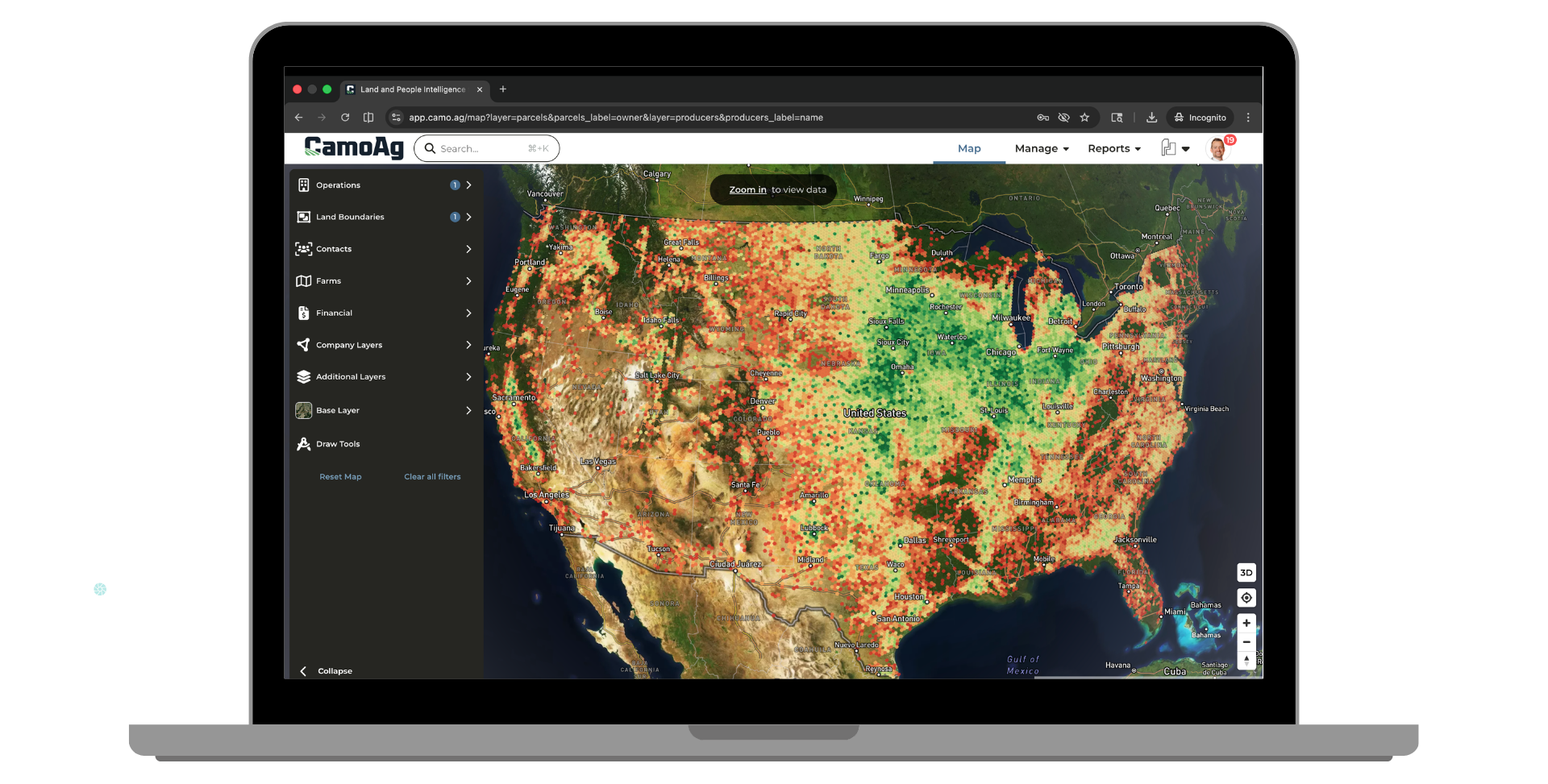
CamoAg has stayed largely under the radar over the past few years as it has honed its platform, says Kull. “You try certain things, and then you realize, hey, there’s actually a big problem to be solved here. [Through Tillable], we started with very good foundational data on farmland, soil quality and the crops being grown. And if you imagine a data layer cake, we then started layering on additional data.”
CamoAg today is built almost entirely on publicly available data such as land ownership records, transactions, mortgages, equipment financing data, trucking data, and USDA data, to help sales and marketing people at ag retailers, input manufacturers, and lenders improve their pitches to farmers, who are often frustrated by poorly targeted or ill-informed approaches, claims Kull.
The platform provides detailed insights on farms, including estimated acreage, land ownership, crop mix, equipment scale, and indicators of growth or sophistication, utilizing AI to generate deep research reports on individual farms. It also features a natural-language interface allowing users to query data conversationally, helping salespeople prepare for meetings and even find small personal details that can serve as icebreakers, says Kull.
“Hey, I see that you just won an award, or I see that you show cattle, right? You’re just looking for that point of commonality.”
In a nutshell, he says, CamoAg helps salespeople identify which farmers are worth contacting and how to approach them in a more relevant way.
While farmers do not currently contribute data directly, Kull suggests there is potential for this in the future, particularly as a way for farmers to signal their interests or promote side businesses, to return to the LinkedIn analogy.
“We’re not doing that yet today, but I do think there is a world where I call it farmer-to-farmer commerce. In addition to farming, farmers are selling other things to other farmers or providing other services, especially in this ag economy.”
The business model
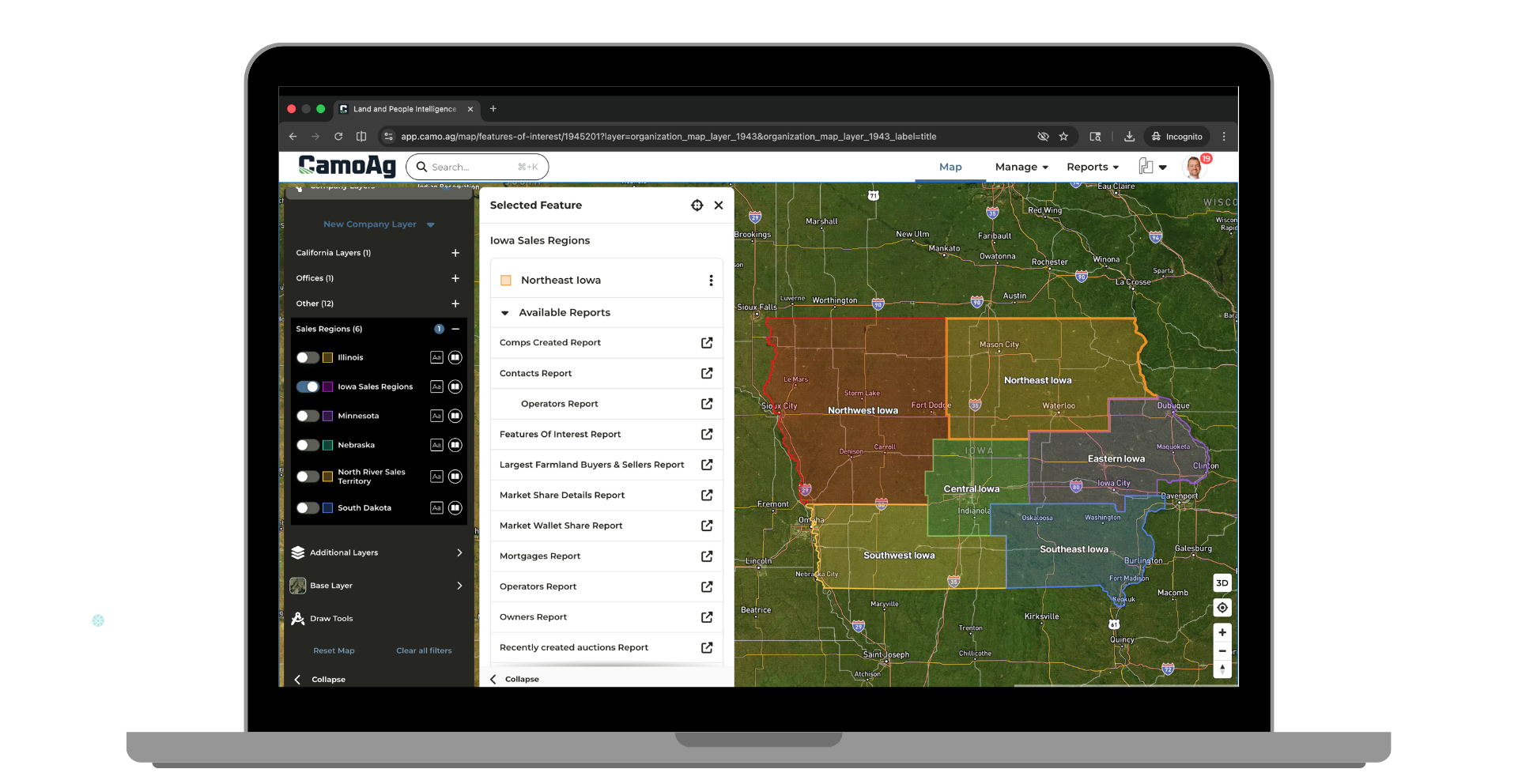
While individual users can access a lower-tier version of the product via a subscription app, the core business is enterprise-focused, with pricing based on platform access and per-user fees, and deeper integrations into CRM or ERP systems at higher tiers.
“We’ve been most successful with the top ag retailers, the top input manufacturers, the top ag lenders,” says Kull. “A good portion of the Farm Credit System [a nationwide system of borrower-owned cooperatives that provide loans and financial services to farmers, ranchers, and rural businesses] is on CamoAg today. We’ve also had some conversations with some of the big equipment manufacturers.
“Our largest installed base is in the low thousands [of users]; we don’t disclose the [total] number of users on the platform, but it is in the thousands.”
The core value proposition is framed around improving sales efficiency and helping teams decide where best to prioritize resources, whether that is on deepening relationships with existing customers or prospecting for new ones, for example.
“We can tell a salesperson how many acres we think the farmer [being targeted] farms or owns,” says Kull. “We also know the size of their equipment fleet, what crops they grow, if there are signs of growth of a farming operation. So again, it really comes down to segmentation. Say a marketing person needs to get the word out about a new product, we can help them build lists of farmers that would be a good fit.”
Doing more with less
While each of the businesses he cofounded is different, the throughline is turning data into actionable insight, says Kull. “It’s just this relentless pursuit of trying to find data that can help people do a better job.”
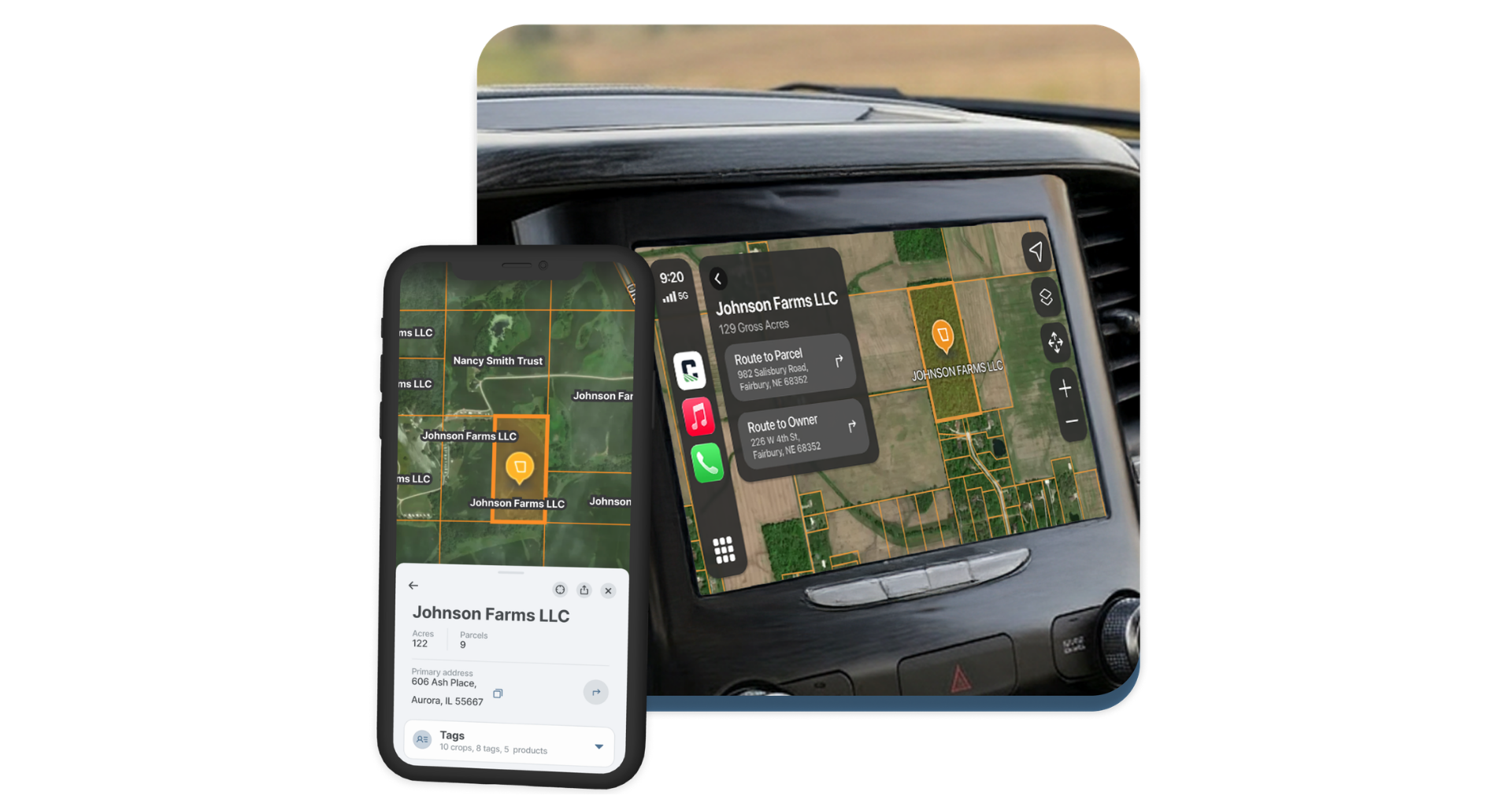
He adds: “What is interesting is the market has evolved and gotten more sophisticated in the last year, so I think the expectations for tools like this have risen, and then it’s kind of like, hey, what’s next? Can we do territory analysis? I want Salesforce integration. I want CarPlay, and so on.”
The bottom line, he says, is that everybody in this industry is “having to find ways to do more with less. And that’s been a tailwind for us. Sales teams are covering larger territories and they’re looking for tools to help them operate more efficiently. The promise of CamoAg is if you can have a better data set to call on your farmers, you can be more efficient with your time.”
What’s next?
Asked about international expansion, there is clear demand, but some challenges, he says.
“We frequently get questions about Canada, South America, and Europe as most of the crop protection and seed companies are international companies with sales teams overseas that need tools like this. But other countries do not capture as much information about their agriculture, so then we would be trying to pull all this data together on our own, which would make it more challenging.”
In contrast, he says, “USDA is unrivaled in the world in the amount of data it is collecting and so we are 100% focused on the United States today.”