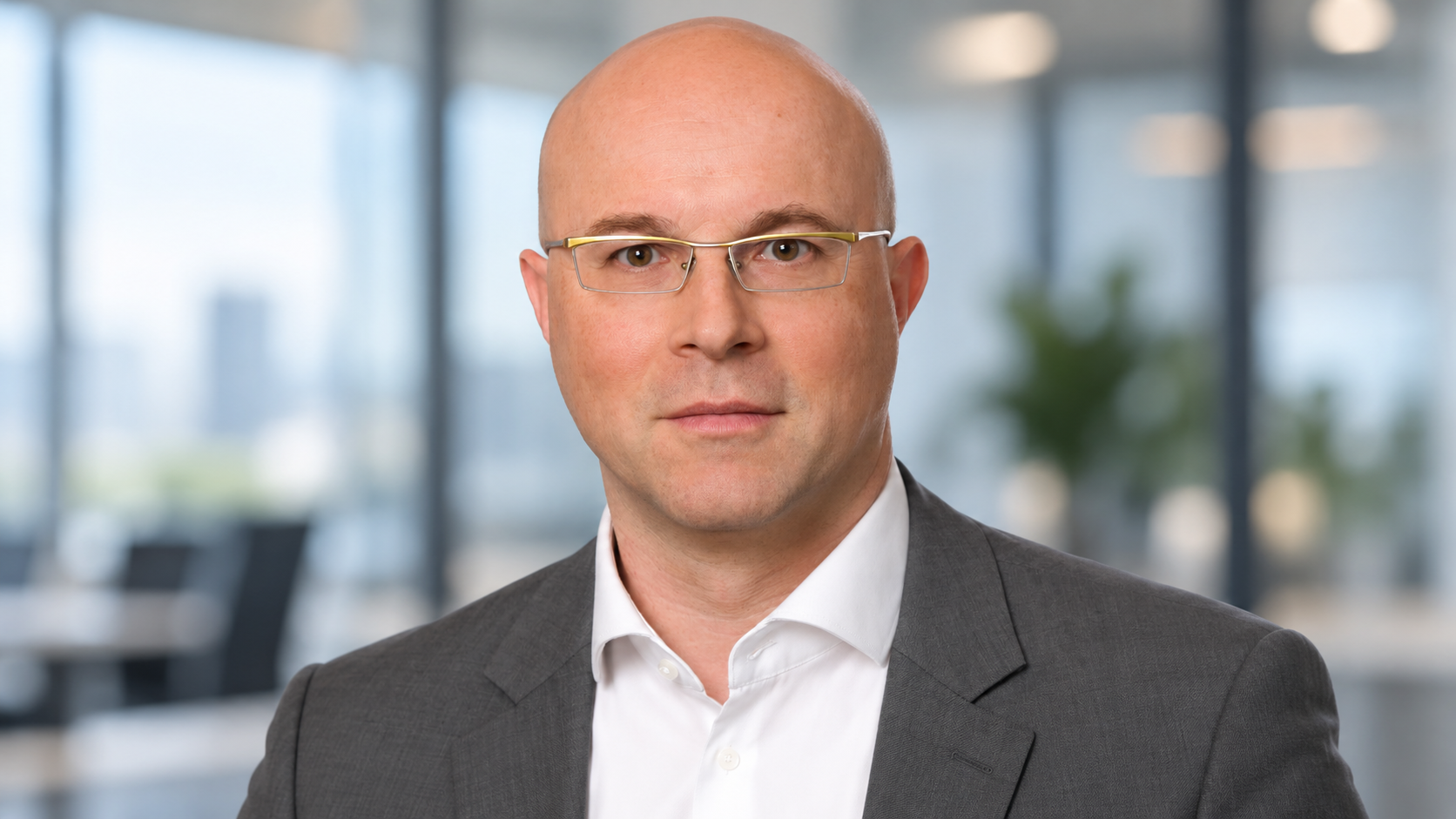
For agrifoodtech startups struggling to raise capital, striking a deal with a large corporate, can look like a lifeline. But founders should think twice before agreeing to exclusivity arrangements, endless pilots, or term sheets that could come back to haunt them, warns George Bilkis, managing director at family-backed German investment firm Aleph Eins Capital.
A former M&A executive at German seed giant KWS, Bilkis has seen corporate innovation strategies from the inside and has some blunt advice for startups.
“You have to be brutal as a founder. You have to tie your pilot to a concrete purchase that is going to happen. Otherwise, you will be wasting your resources and your precious time on pilots to nowhere. It will be pilot after pilot. You have to get to the people in the organization who are real decision makers and say, look, you see the value that my innovation brings to you. You have to make it automatic that you buy the product if it performs as promised.
“If you do not have that initial understanding of how your relationship will develop through commercialization, it’s wishful thinking. Sometimes we have that in romantic relationships. If somebody doesn’t want you, you can be as strong as you want, you cannot convince them. They will waste your time.”
AgFunderNews (AFN) caught up with Bilkis (GB) to discuss the pros and cons of corporate partnerships, the changing economics of agrifoodtech investing, and where he sees opportunities in a challenging market.
AFN: What’s your background?
GB: Before joining Aleph Eins, I spent six years at [German seed giant] KWS, where I was responsible for all their global M&A activities including joint ventures and the transaction side of their VC activities. Before that, I spent many years in corporate finance advisory and private equity holdings, more or less standard investment banking.
AFN: Give us the basics on Aleph Eins…
GB: I’m a partner at a family-backed investment vehicle. The core business of the family is agriculture. We are the biggest grower of vegetables and cereals in the UK, the biggest ag chem distributor in the UK, and we’re building the largest water reservoir in the UK, so it’s a substantial operation with generational wealth that owns a lot of land.
AFN: What sort of capital are you providing?
GB: Aleph Eins deploys capital in three major buckets. Number one, and our major focus, is buyout situations where we take controlling positions in firms in agriculture, chemicals, water, and energy and predominantly look at [firms with] an enterprise value of €200-300 million ($221-332 million).
You can think of us as something between a private equity fund and an independent sponsor. We are not a closed-end fund, but we are in the position to underwrite any transaction which allows us to participate in competitive processes, out of which we do syndicate out a substantial part of our equity check among other families and a network of institutional investors. However, we keep a substantially higher share to ourselves, higher in comparison to say a standard GP-LP relationship, so we keep 30% of the equity check, not 5%.
Number two, we have entrepreneurial activity related mostly to the land that we own in the UK and worldwide. This is mostly related to the land that is not well suited for open field agriculture. So I mentioned a water reservoir. We also have a biochar plant, we have a syngas plant. We think about various projects in controlled environment agriculture.
And bucket number three is we invest in funds, although we have very few positions in that bucket.
AFN: What investments have you made so far?
GB: We started about a year ago and we are now working on an acquisition of a seed company and we have a chemical company in live discussions of substantial size also with a sustainability angle. We always look for something that would make our planet a bit more beautiful than it is now.
Aleph Eins also have additional agricultural projects that relate more to the processing side of the business
AFN: What did your time at KWS tell you about how startups should engage with large corporates?
GB: It’s critical to understand how bigger companies adopt innovation, and if you get to the point where they say, “That’s an interesting tool, we want to have access to that,” and then, “Will our competition get access to it?” you have to be very careful. Many startups are tempted to get into exclusivity deals because it’s a matter of survival sometimes, but actually, it can kill them.
AFN: So how should startups handle exclusivity requests from a corporate?
GB: You just say no. There is no such thing. Exclusivity means that they should be ready to buy you out immediately. Otherwise, you will become the servant of one master with a very limited possibility of exit and every potential investor that will come will say wait a minute, you have one customer and you are bound to him like a slave? Nobody will invest in you.
AFN: How do startups avoid the endless pilot with corporates?
GB: You have to be brutal as a founder. You have to tie your pilot to a concrete purchase that is going to happen. Otherwise, you will be wasting your resources and your precious time on pilots to nowhere. It will be pilot after pilot. You have to get to the people in the organization who are real decision makers, and you have to say, look, you see the value that my innovation brings to you. You have to make it automatic that you buy the product if it performs as promised.
If you do not have that initial understanding of how your relationship will develop through commercialization, it’s wishful thinking. Sometimes we have that in romantic relationships. If somebody doesn’t want you, you cannot convince them. They will waste your time. Maybe they will abuse you.
But if you get to that point that you are able to formalize that relationship going forward so that it is beneficial to everyone, it’s much easier to bring in external finance. Which in turn gives your partner confidence that you will still be around, that you will not die on them.
This is important because one of the considerations that any big company has is whether this particular supplier of a product or service will actually be around in one year, especially if they have to create a joint product or there is something in their product that relies on the startup.
An additional point is that when you formalize relationships with corporates, you should insist that you can use them in your fundraising process and get them to give feedback to potential investors.
AFN: What are the pros and cons for a startup of taking money from corporates?
GB: The devil is in detail. On the one hand, if venture does not work, you have to have more patient capital. And corporates are one of those sources. But it’s not for free.
If you let a corporate dictate to whom you can sell and to whom you cannot sell, you automatically put a restriction, a cap, on your valuation and your ability to raise further capital.
AFN: What about right of first refusal?
GB: This is one of the worst of the worst. The answer should be no, as simple as that. Don’t take that money. It is a poisonous pill.
AFN: But don’t most CVCs know that if you attach restrictive conditions to financing it will make it harder for a startup to attract the additional investment it needs?
GB: What I’m saying is that each one is different. If there is a capital source that gives you a fair valuation and does not require rights that will outright kill you down the road, take the money. But every CVC is different. Some invest from the balance sheet. Some are managed more professionally like a fund.
You have to make sure you understand what each thing in the term sheet means for you in the next financial round, at commercialization, and at the exit, because all that will eventually come back to [haunt] you.
AFN: Who is buying? Aren’t all the big ag corporates a bit distracted with internal restructuring right now?
GB: We did see a certain freeze on activities. Not a total freeze, but definitely there was a waiting period, where the corporate goals have been dictating priorities, especially if they are structured as more off the balance sheet investments.
AFN: Where is the money going to come from in future for agrifoodtech?
GB: You have waves in the VC world. Today people are raising a proptech fund, the next day a fintech fund, the next an agtech fund. On the other hand, those who do understand the space will attract more capital from LPs as I think there is a realization that this category is a standalone category, something between private equity and venture.
You do not construct your portfolio based on two or three outliers that will return the fund. You construct your portfolio, your fund model, based on much better survival rates, and that requires a different strategy in terms of portfolio company development. But you also have family offices stepping in, which often have a charity angle where people are tremendously rich and they want to bring their values to investing even if it means lesser returns than say with a standard or upper quartile software VC fund.
At least in Germany, you have quite rich families saying we want to develop this innovation because it’s important to us. We want to leave the planet in a better shape than we found it.
AFN: Are there still a lot of ‘zombie’ companies in agrifood portfolios?
GB: There will be even more clearing out. You cannot prop up companies for prolonged periods of time. Eventually you say, wait a minute, what am I doing?
So there will be more consolidation and people will try to exit these companies, but not the exit that we all think of where people become extraordinarily rich. But they will get their 30 or 50 cents on the dollar and say thank you that they recovered some capital, and this innovation will find its place in a consolidator. We see that, for instance, in the recent CropX deals.
AFN: What’s happening with valuations now?
GB: I think for new companies they are much more realistic. It’s all about how close you are to commercialization. When will you start generating sales? That’s the most important part. How will you scale?
AFN: Five years ago, the Future Food-Tech event was mostly alt protein. Today you see a ton of startups digitizing food supply chains and using AI. But are they investable if everyone can access AI tools now?
GB: It’s a very valid question. If all your innovation is digital low tech, could anyone with a little knowledge of Claude just replicate it? Usually, it all boils down to your ability to commercialize and to sell.
AFN: Many firms say AI tools can accelerate R&D, but aren’t field trials and regulatory processes still just as long?
GB: I hear people say all the time AI will speed everything up. And my answer is always: how sure are you about that?
For deeptech and biotech, pharma came to the conclusion a long time ago that we can develop a new substance, but you have to go through a very lengthy approval process to bring it to market.
So startups specialize in bringing their innovation to a certain point and then offload it to someone else who is much richer, much bigger [who has pockets deep enough to take it to market]. And I guess it will be the same here because eventually no startup, especially if it’s venture backed, can afford to wait years and years [before it can get to market].
AFN: Do VC firms in agrifood need to recalibrate expectations or restructure funds?
GB: Usually when people talk about venture capital, they think about very innovative tech-heavy, no revenues now, huge revenues later companies basically. It’s enough to have two companies in my portfolio that will deliver 100x.
But if you have lower exits, you have to invest in companies that present lower risk, so that your return to risk ratio makes sense. You are not competing with Andreessen Horowitz, you say I am giving you less risk because I’m picking companies that are tech heavy, but they are in a sector that is macro driven and grows.
So you have to play basically almost like the private equity game, which means you go for profitability, create unbreakable companies and say we will give you lower returns in comparison [to traditional VC], but you will be taking much less risk with us. We will not be writing off 90% of our portfolio, we will have only very few defaults.
AFN: So which kinds of sectors of companies fit that profile?
GB: I would say precision agriculture, especially today, when so many companies basically went through down rounds, you can pick up very high TRL [technology readiness level] companies or really TRL10 companies at very low valuations. You are basically playing the private equity game with them, deploying and syndicating and going through M&A and buying all kind of competitors and growing and creating wonderful companies.
In biotech and deep tech you have to have a clear path towards what will be the driver of the exit and what is being done now to ensure that the prerequisites for this exit will materialize.
In alternative proteins, people were building on demand that was not there. But it’s not like there are taboo sectors for me in the agrifood space, although many of the companies in some sectors are absolutely not investable.
AFN: Is ag robotics more investable now?
GB: Yes, I think so. The readiness of farmers to adopt the solutions is higher. When you come today and say to farmers, we have a robot that is also doing non-chemical weeding, they know what you are talking about.
AFN: What else are you excited about in the agrifoodtech space?
GB: I’m interested in everything that touches robotics. I also think that coatings for seeds to help tolerate drought will also definitely pick up because, especially in Europe, we do see the weather change pretty fast, and you have to adapt very quickly. And this is impossible to do that rapidly via breeding and genetics.
👉 Read more interviews in our Investor Q&A series.