Agrifood has long debated who should pay for farmers to switch to regenerative agriculture practices. Royal Canin and Roquette now offer a new approach that takes the financial weight away from farmers and spreads it along the supply chain.
Ingredients supplier Roquette provides Mars-owned Royal Canin with wheat for its pet food products. Via a partnership with Soil Capital, the two companies will now co-invest in the farms from which they source that wheat.
The transition to on-farm regenerative practices typically needs upfront capital to finance things like new equipment, cover crops, and adapting to new crop rotations. Currently, farmers either bear this cost themselves or are part of a corporate insetting program that may or may not offer economical support.
“We believe that a joint investment model is the most effective way to drive large-scale adoption of regenerative agriculture,” Magali Amouroux, sustainability manager at Roquette, tells AgFunderNews.
“By sharing both the costs and the value created across the supply chain, this approach helps reduce the financial burden on farmers, aligns incentives among stakeholders and ensures a fair distribution of benefits.”
Bridge over different methodologies
Soil Capital helps companies monitor, measure and report on regenerative agriculture outcomes in addition to providing agronomic expertise to farmers.
For this partnership, it plays the crucial role of a bridge joining two distinct methodologies with one independently verified farm-level dataset.
Different companies use different methodologies to calculate the carbon footprint of a product or ingredient. These are typically based on the company’s sector. Royal Canin uses economic allocation, most common to the pet food industry, while Roquette uses mass balance allocation, the standard for the starch industry.
The difference in methodologies means these companies’ figures are not directly comparable and could lead to discrepancies and double counting outcomes.
“What you need is a third party that has a robust MRV [monitoring, reporting, and verification] framework that is compliant to external guidelines,” explains Luc Beerens, global director for sustainable sourcing at Royal Canin.
In this case, Soil Capital will handle the monitoring, measuring, and data collection on the farm as well as verification of that data. All farm data undergo third-party verification under ISO 14064-2 by TÜV Rheinland, ensuring methodological integrity through independent annual audits.
The idea is to allow the two companies to continue operating with their own methodologies while working off the same neutral dataset.
“As long as you base it on the right farmer data, there’s no you know double counting,” Beerens tells AgFunderNews.
“By managing data traceability for both companies, Soil Capital enabled us to work together on the same program while maintaining our respective accounting methodologies and avoiding double counting of environmental benefits,” adds Amouroux.
Replicating the model
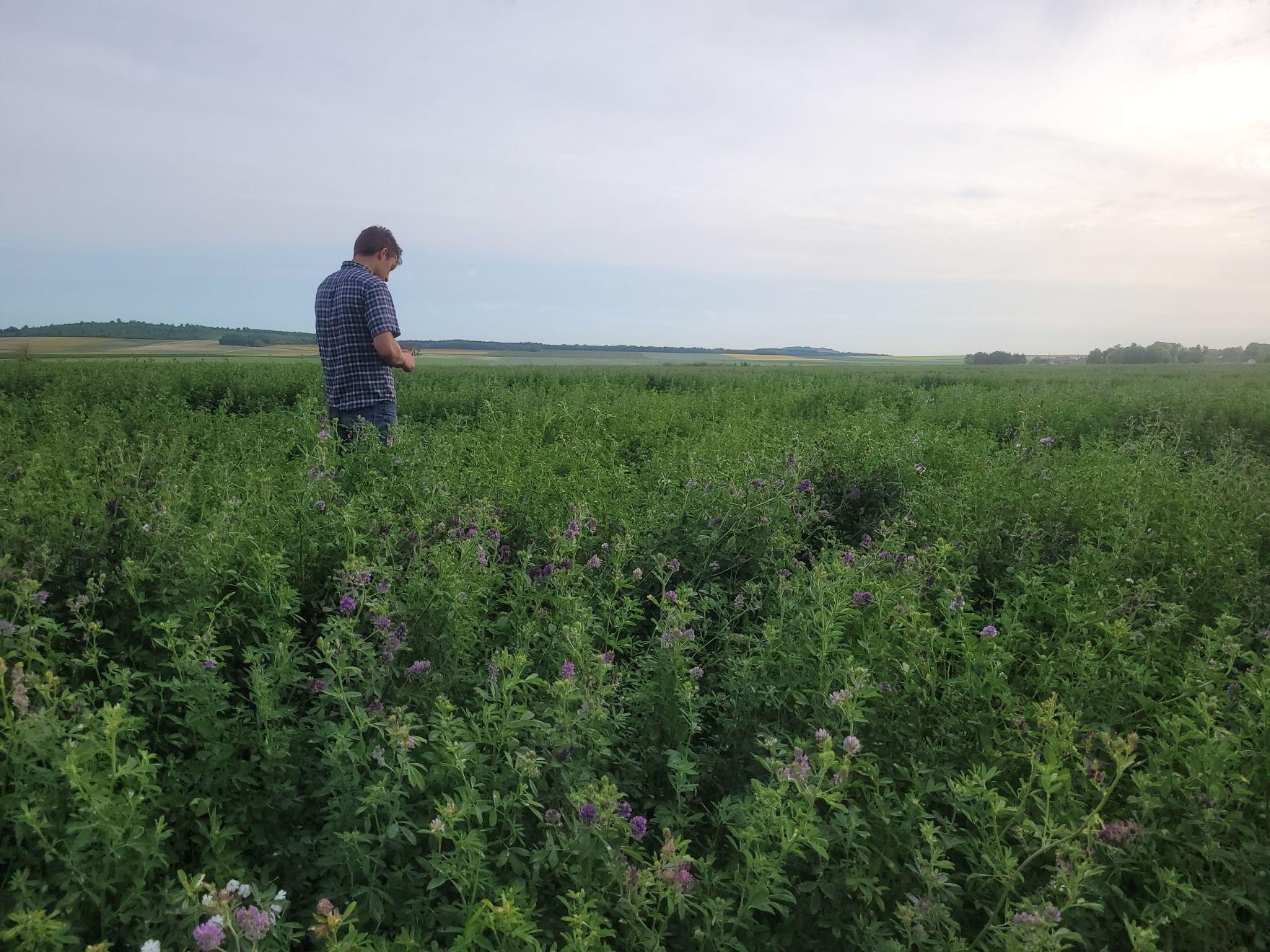
The partnership will cover more than 60 farms covering over 4,700 hectares in France’s wheat supply shed.
Results from the transition (e.g., carbon sequestered) will generate Soil Capital Credits, of which farmers will receive 70%, according to the companies.
Beyond financial support for farmers, the partnership will help the companies become compliant with the fast-changing regulatory landscape in Europe, says Beerens.
For example, the Carbon Removals and Carbon Farming (CRCF) certification Europe’s first government-backed framework for carbon removals. The Corporate Sustainability Reporting Directive (CRCD) requires companies to report on environmental impact across their value chains.
“We are building partnerships that are needed when [these regulations] come into play,” he notes. “We obviously need need more.”
To that end, both companies are currently exploring ways to replicate this co-financing model with other companies.
“We are in this for the long-term transition to reduce our carbon footprint, but also to make our supply sheds more resilient,” notes Beerens.
“We would like to engage more customers who share our sustainability ambitions to jointly finance the agricultural transition while ensuring its benefits and risks are shared along the value chain,” adds Amouroux.
“This partnership with Royal Canin demonstrates that differences in carbon allocation methodologies do not have to be a barrier for collaboration. It provides a replicable model that could be extended to other crops and geographies.”