
The recent news of Twiga entering into administration sent shockwaves through African tech, marking a dramatic conclusion for one of the continent’s most visible ventures—and perhaps for a specific era of agrifoodtech as well.
The Kenya-based ag marketplace, launched more than a decade ago, stood as the flagship model for a generation of agrifoodtech startups: founded by high-profile entrepreneurs, backed by world-class investors, and capitalized with tens of millions before establishing a sustainable unit-economic baseline.
“Twiga is the poster child for how not to invest in food and agriculture in Africa, wasting $185 million and causing investors like Goldman Sachs, IFC, DFC, and many others to think food/ag businesses are bad investments,” author and impact investor Luni Libes wrote in his post-mortem last week.
Some lay the blame on a flawed core model, others on investors treating physical agrifood supply chains like asset-light software, and many on a combination of both.
“The trend now is to have much more patient capital and more cashflow-based businesses,” says Sewu-Steve Tawia, managing director at Africa-focused fund manager Asime Partners. “What we are seeing is the tail end of business models that were funded based on the founders’ ability to raise capital rather than the actual ability to operate in an environment that is very challenging.”
Investor appetite vs physical economics
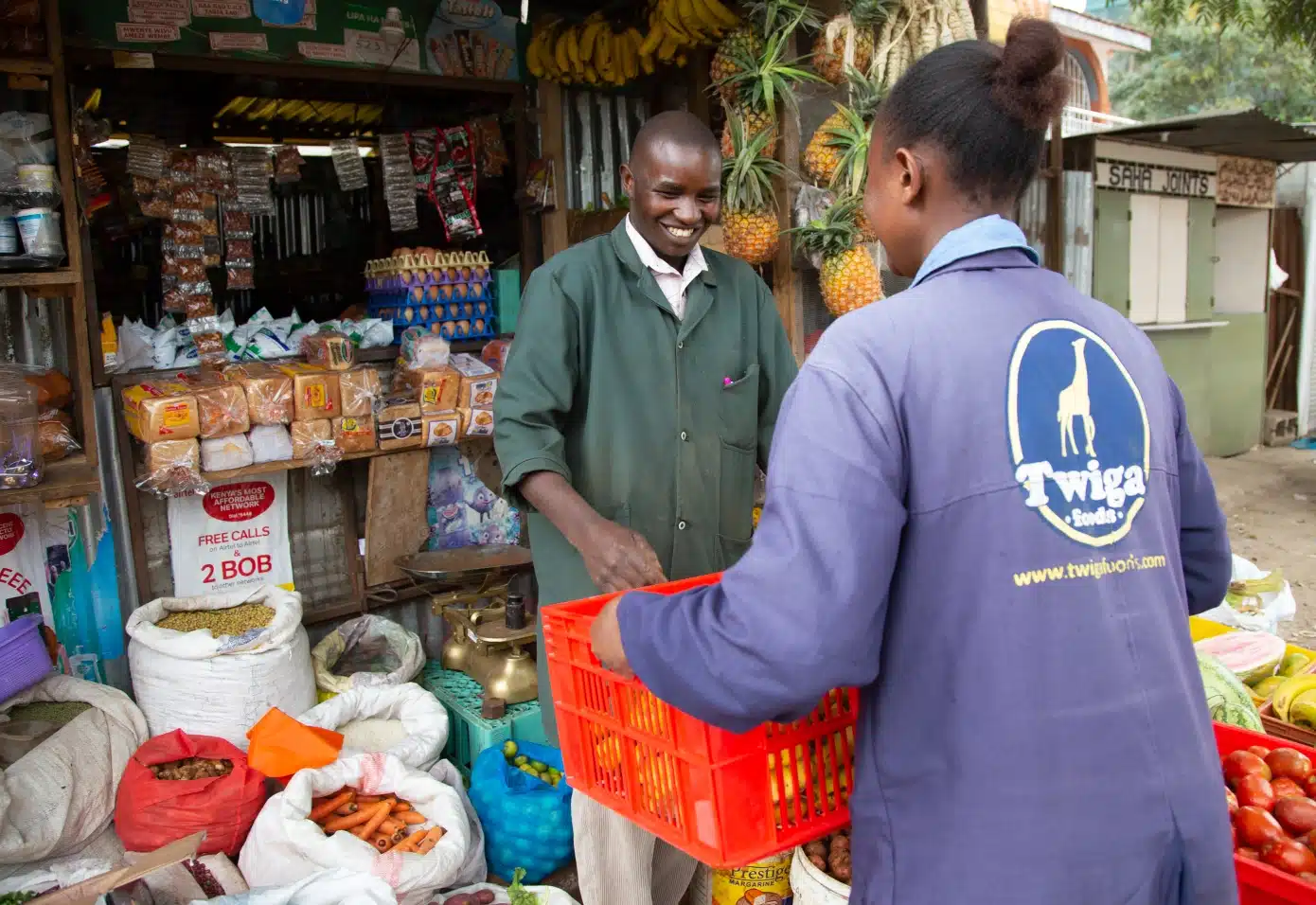
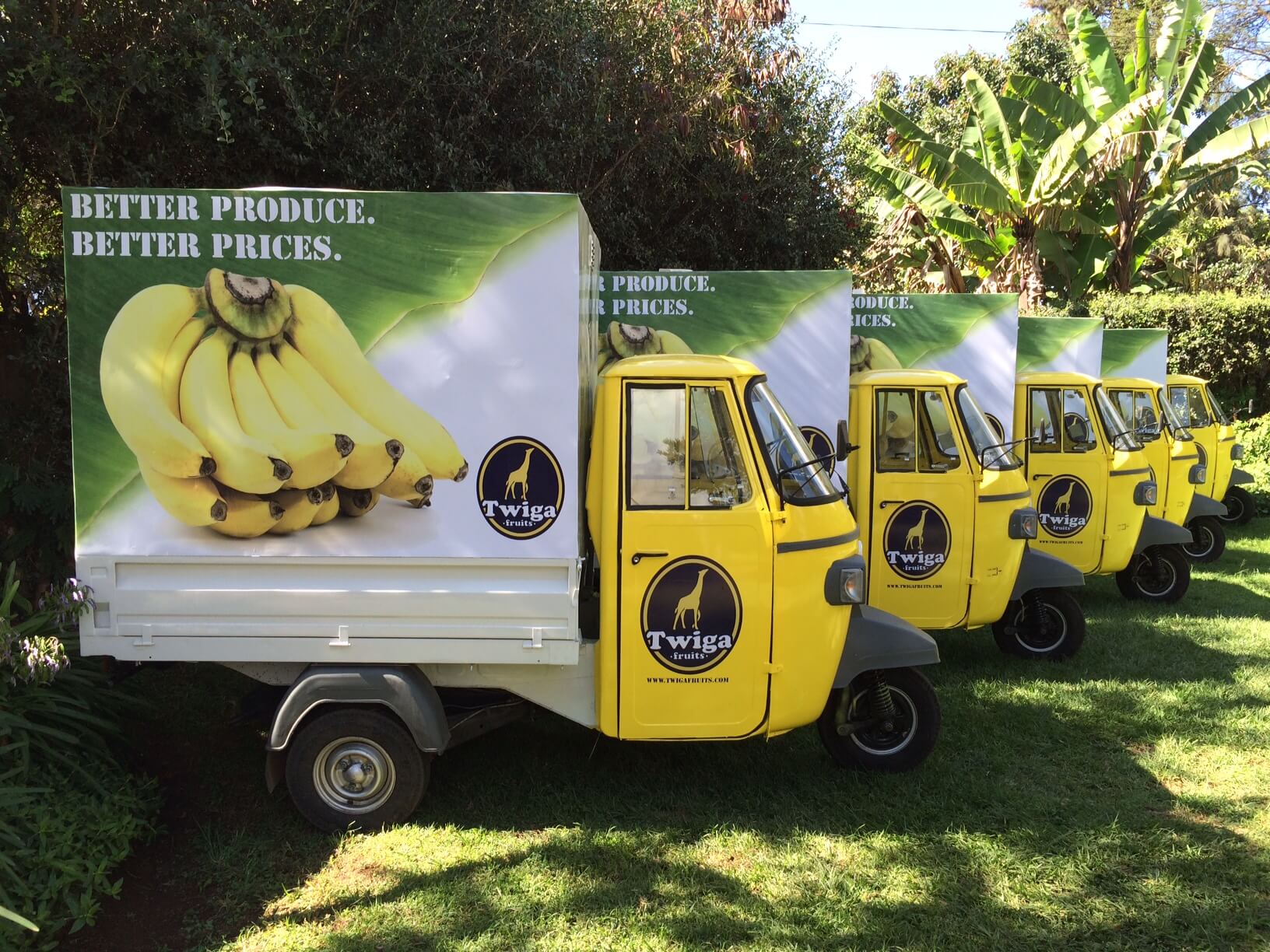
Twiga launched in 2013 connecting smallholder banana farmers and local street vendors in Nairobi. The pitch was clean: give micro-retailers access to lower-cost, high-quality produce while offering farmers predictable pricing. Business took place via an app, supported by Twiga’s own warehouses and delivery fleet.
Global investors rushed in. Goldman Sachs led a $30 million Series B in 2019, followed by Creadev’s $50 million Series C in late 2021. Backed by additional partners like IFC and TLcom, Twiga eventually raised roughly $185 million, expanding from bananas into staple vegetables and packaged consumer goods.
Yet, as Maurice Scheepens at Dutch entrepreneurial development bank FMO notes, “fragmented supply chains, infrastructure constraints, high working capital requirements, and challenging unit economics make it difficult to scale such a model in a financially sustainable way.”
Those underlying mechanics began straining the business as early as 2022. Twiga initiated multiple rounds of restructuring, cut hundreds of jobs, and fell behind on supplier payables—culminating in a high-profile debt dispute with cloud provider Incentro Africa over $260,000 in outstanding fees (later settled out of court).
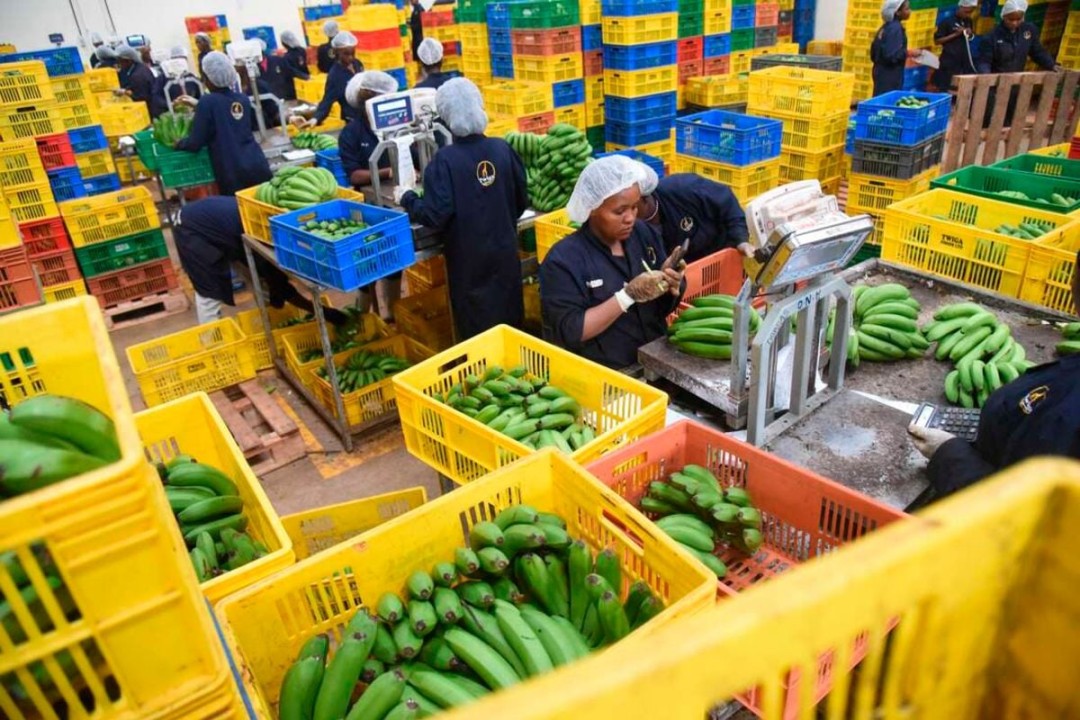
The most common view today is that the business never made money on what it actually did. Moving fresh produce from thousands of small farms to thousands of small kiosks means paying for collection, warehouses, trucks, spoilage and customer credit, on goods that sell for very little.
As Nairobi-based ag advisor Daniel Ochanda wrote bluntly on LinkedIn: “Technology can lower transaction and information costs; it cannot eliminate the physical economics of a tomato, banana, or onion moving through a fragmented market.”
Twiga was also competing against informal market brokers it set out to replace, who operate with hyper-local social networks, near-zero fixed overhead, and no venture benchmarks to meet.
Too much money, too early
Twiga raised its biggest rounds while capital was flowing freely, at the peak of the agrifoodtech investment boom.
While this funding built extensive physical infrastructure—including a major distribution hub at Tatu City—it also bound the company to high fixed operating costs and reliance on continuous capital raises.
When global venture markets tightened, Twiga’s planned Series D never materialized. In late 2023, Creadev and Juven backed a $35 million convertible bond, alongside $1 million in personal capital from co-founder and then-CEO Peter Njonjo. He then went on sabbatical and left the board in early 2024. Former Jumia executive Charles Ballard took the helm to execute an asset-light restructuring. Njonjo and Ballard did not respond to a request for comment.
In a strategic attempt to shift toward a franchise model and acquire immediate distribution scale, Twiga bought majority stakes in local consumer goods distributors Jumra, Sojpar, and Raisons. None of this helped alleviate the legacy debts Twiga still faced.
Macroeconomic pressures compounded these operational struggles. Between 2022 and 2024, the Kenyan shilling lost about 30% of its value against the US dollar as multiple factors converged: a hike in US interest rates, the Russia-Ukraine war’s impact to fuel pricing, and Kenya’s heavy debt burden.
For Twiga, this meant fuel for trucks and imported packaged goods became more expensive, squeezing both the consumers and the company. Twiga also raised money in dollars but earned in shillings, so each shilling of sales was worth less to investors, and any dollar-denominated debt became more expensive to service.
In January 2026, a creditor petitioned the High Court to wind up an affiliate, Twiga Tatu SEZ. On August 17 the main operating company, by then renamed GT Flow Ltd, was placed into administration, quickly followed by parent entity Twiga Foods Ltd (renamed Templar Field Ltd).
Scheepens agrees that “the widespread availability of venture capital, combined with the strong focus at the time on top-line growth rather than margins and unit economics, did not help” Twiga.
“It allowed Twiga to scale a very operationally intensive model and postpone some of the harder questions around sustainable profitability.”
Where does African agrifoodtech go from here?
Data from AgFunder shows that top-funded African agrifoodtech startups over the past decade have remained largely concentrated among a few established players. Preliminary figures for 2026 show sector equity funding sitting under $150 million, reflecting widespread investor conservatism globally.
“Appetite for equity has gone down because there’s literally less money,” notes Asime Partners’ Tawia. “Investors are seeing higher interest rates and want to match that, and they have shifted to later, growth-stage companies. Entrepreneurs have been building companies for the last seven to 10 years have given away so much equity they prefer to take on debt.”
Yet, Twiga’s administration does not signal the death of B2B food distribution in East Africa. Rather, it is a changing of the guard.
As post-mortems of Twiga circulate, Tanzania-headquartered East Africa Foods (EAF) has just announced a $40 million Series B equity and debt raise led by the Private Infrastructure Development Group (PIDG), Oikocredit, and FMO.
The contrast in investor strategy is telling. Where Twiga relied on fast-paced venture capital to subsidize expansion, EAF has built its foundation on DFI backing, concessional debt (including from the Schmidt Family Foundation), and direct investment in physical supply chain assets. Operating across Tanzania and Kenya, EAF sources from over 28,000 smallholders, processes and packages produce under its own consumer brands like Onja and Golden Banana, and runs its own transport network (EA Logistics) with over 100 trucks.
“A third of what our farmers grow never reaches anyone’s table. That is not a farming problem: it is an infrastructure problem, and it is solvable,” said EAF Founder and CEO Elia Timotheo in a press release announcing the round.
The resolution of Twiga’s administration marks a definitive turning point for African agrifoodtech. Moving forward, growth in African agrifood supply chains will depend less on asset-light venture models and more on patient capital building the unglamorous physical infrastructure required to connect farm-gate to urban vendor.
“A lot of founders, fund managers, and even LPs are looking for innovative ways to invest in companies now: dividend payment options, revenue share, milestone-based ways to finance companies with less risk and more results,” says Tawia.
“Venture capital is not the way to finance SMEs in Africa, and therefore we need to create a new asset class that is adjusted to our environment that takes a minimum of seven years to get to maturity, not five.”